Between the two
Roofing Restoration in Tomball, TX
Correcting the failed areas of a roof whose structure is still sound. Common on the older Tomball housing stock, where repairs have stacked up over the years.
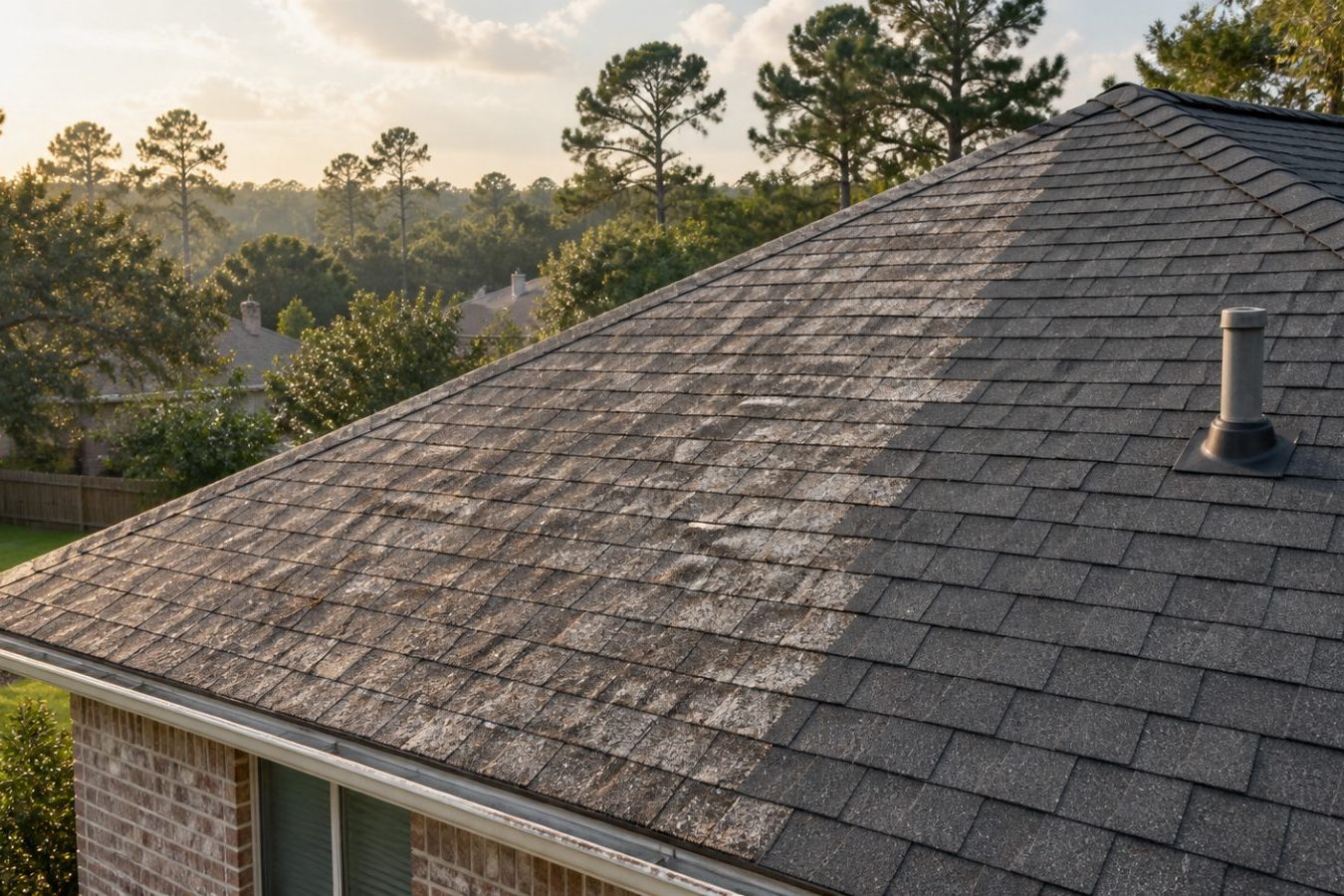
What this actually is.
Restoration is the answer most homeowners never get offered, because it sits between the two most people are used to hearing. It applies to a roof that is worn but structurally fine — deck solid, field intact — where what has actually given out is the flashing, the sealant, the boots around the penetrations and a countable number of shingles.
We go over the whole roof and list every component that has failed or is close to it, then correct those specifically instead of replacing a structure still doing its job. You get a straight number for how many years that should buy, with the reasoning attached.
- A roof that is aging but has never had a structural problem
- Pipe boots cracked or gone brittle in the sun
- Flashing separated at a wall or chimney, on sound decking
- Wear showing up in specific spots rather than across the field
- Several small repairs already done, each by a different hand
- You need a few more years before a replacement fits the budget
Roof restoration is not the same as a roof repair
A repair is reactive. Something fails, you notice it, someone fixes that thing. Restoration runs the other way round: the whole roof gets gone over, every worn component gets listed, and they all get dealt with in one visit.
On an aging roof that distinction is the entire point. The parts that fail — boots, sealant, exposed fasteners, flashing at walls and chimneys — all went on the same day and have had the same weather since. When one goes, the rest are rarely far behind. Handling them one at a time as each announces itself means paying to get a crew out every few months for years.
Worth saying plainly: restoration is not a product and there is no industry definition of it. What matters is the scope written on the page — which components are being replaced, which are being left, and why each decision went the way it did.
Which roofs qualify for restoration, and which do not
Two things have to hold. The decking has to be sound, and the covering has to have serviceable life left. If either has gone, restoration is money spent on a roof that still needs replacing, and anyone who takes the job anyway is doing you no favours.
The honest test is what the roof looks like away from the obvious failures. If the shingles across the open field are still flexible, still holding granules and still sealed down, there is time in it. If they are brittle, thin, curling at the edges across whole planes or dumping grit into the gutters, the field is going and the components were simply the first thing you noticed.
We walk the roof and tell you which of those two you are in, with photographs. A clear no is a good outcome here — it saves you spending on a roof that needs replacing inside a couple of years anyway.
What roof restoration services actually buy you
Time, on a roof you are not ready to replace. That is a real and often sensible thing to want. Roofs do not fail on the schedule your finances would have chosen, and a few more years of planning room is worth paying for.
What it does not do is reset the clock. The covering is still the age it is and will still reach the end of its life on roughly the schedule it was always on. Anyone presenting restoration as an alternative to eventual replacement is selling something that does not exist.
So the question worth asking is not whether it will work but how long it should hold. A range, with the reasoning behind it, is what tells you whether the spend makes sense against simply putting the same money toward the replacement. Sometimes it clearly does. Sometimes it clearly does not, and we would rather say so than take the job.
What moves the price.
We do not price a roof we have not been on. These are the things that actually move the number once we have.
How many components have failed
The scope here is a count, not an area. A roof with a few split boots and one separated flashing run is a different job from one where every penetration and every wall junction has gone at once.
Roof size and access
We still have to cover the whole roof to inspect it properly, so a large or steep plane costs more even when the list of failures is short.
Matching the existing material
Replacement shingles on a weathered roof rarely match perfectly, and a discontinued line makes that worse. On the older Tomball streets, where roofs went on at different times and have been patched by several different hands, matching is often already a lost cause and the honest question becomes how visible it will be.
Ventilation work
If the attic underneath has been cooking the roof, correcting airflow usually gets quoted alongside — otherwise the restoration is repairing damage whose cause is still running.
What to ask before you hire anyone.
Texas does not license roofing contractors, so the checks nobody did for you are the checks you make yourself. Four that are worth the awkwardness.
- Which components are you replacing, and which are you leaving up there?
This is the scope, and on restoration work the scope is the product. A list of what stays is as informative as the list of what goes. - How many years should this realistically buy me?
A range with reasoning is the answer you want. A confident single number, or a refusal to give one at all, both tell you something. - What happens to the price if the decking turns out soft?
Soft decking is the finding that turns restoration into replacement, and it is better to know the branch point before the job starts than to discover it mid-morning. - Can you show me photographs of what is actually failing?
Photographs are how you tell a real assessment from a walk-around. If nobody can show you the failure, nobody found it.
What happens after you call.
Tell us what you can see
A ring on the hall ceiling, grit in the gutters, shingles in the yard after a storm. Describe the symptom. Working out the cause is our job, not yours.
We get on the roof and trace it
Roof plane, valleys, every penetration, then the attic side with a light. Water runs along decking before it drops, so the entry point is almost never above the stain.
You get the finding and the price
What failed, what it takes to put right, what can safely wait until next year. Written down, in words that need no decoding, before anyone quotes you anything.
We do the work we quoted
Scoped to what we found rather than to what we could sell. Under Tomball's 2021 residential code, past 25 percent of the covering the choice stops being ours anyway.
Roofing Restoration — what people ask.
Is restoration just an expensive repair?
No, and the difference is order rather than price. A repair fixes the thing you noticed. Restoration goes looking for everything in the same condition as the thing you noticed and deals with the lot in one visit, which on a roof where every component is the same age is usually the cheaper route over five years.
How do I know if my roof qualifies?
The deck has to be sound and the field has to have life left. Both are things somebody has to get up there and check — the field especially, because it is judged away from the failures rather than at them. We will tell you no when the answer is no.
Will it match the existing roof?
Rarely perfectly. A weathered roof has faded, and a discontinued profile may have no close match at all. We will show you what the replacement material looks like against yours before it goes on, so the surprise happens on the ground rather than on the roof.
Does restoration mean a coating?
Not here. Coatings have their place on flat and metal commercial roofs; on a residential asphalt roof in this climate they mostly hide the condition of what is underneath. What we mean by restoration is replacing failed components, not painting over them.
Will it help when I sell the house?
It helps if it removes the things an inspection would flag, and it does not help if the inspector's note is going to be about the age of the covering regardless. If a sale is the reason, say so early — it changes which of the two answers is the right one.
Is this covered by insurance?
Usually not. Policies deal with sudden damage, and restoration is by definition work on wear that accumulated slowly. If a storm caused part of it, that part may be claimable and the rest may not. Photograph everything first and talk to your carrier.
Can I do the worst parts now and the rest later?
Yes, and sometimes that is the right call — but get the split written into the estimate, with what is being deferred listed by name. Deferred work that exists only as a conversation has a way of becoming an argument.
What is considered an old roof in Texas?
Published figures put asphalt shingle roofs in the Houston area at roughly 15 to 25 years, three-tab at the low end and architectural higher. Heat and an under-ventilated attic both pull that in. Fifteen years is where insurers start paying closer attention, which is a more practical definition of old than any figure a roofer gives you.
Should a 20 year old roof be replaced or restored?
Depends entirely on the field and the deck, not the date. A twenty-year roof that was ventilated properly and has failed components is a strong restoration candidate. The same roof with brittle, granule-shedding shingles across whole planes is not, and restoring it would be spending real money to delay the inevitable by two years.
Other roofing work we do.
Need roofing restoration in Tomball?
Free written estimate, no obligation. Call or send the form.
Free · No obligation · Insured